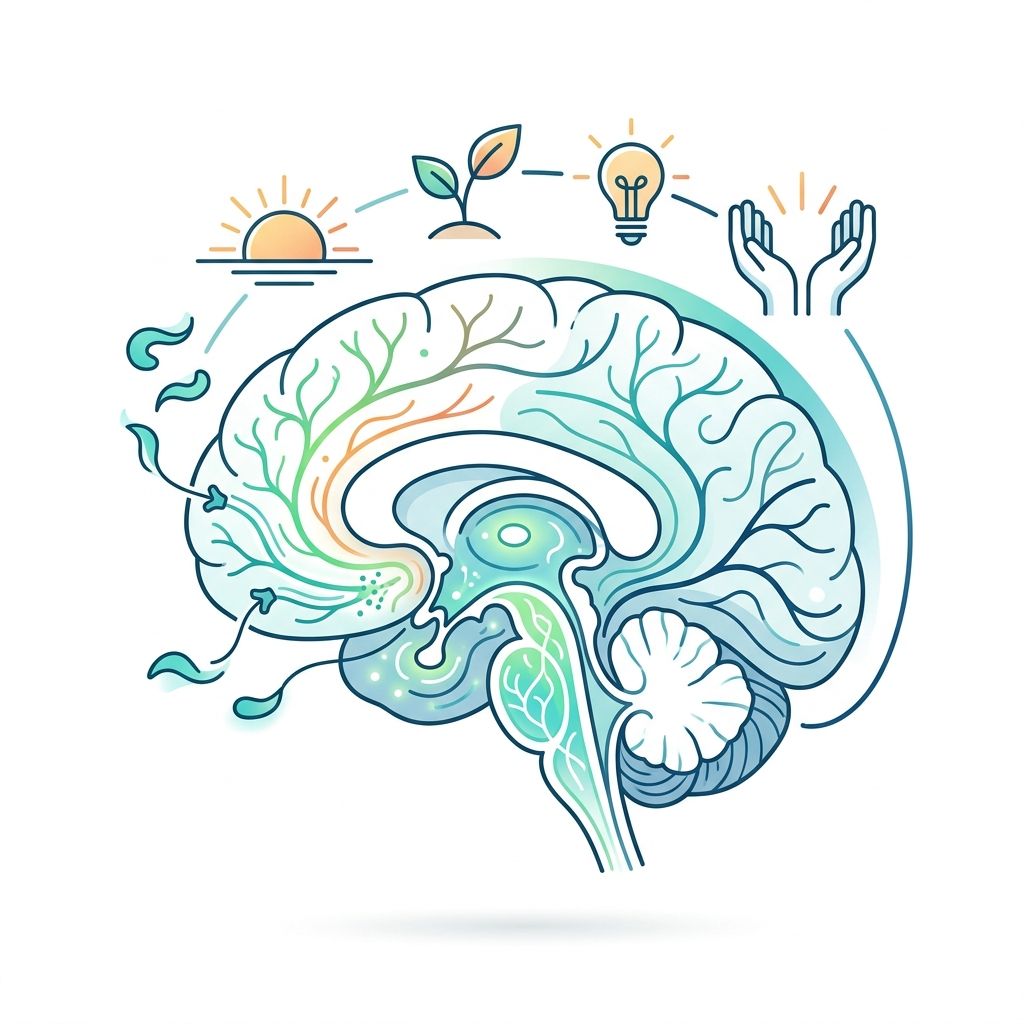
If you have ever wondered why quitting feels so hard when you genuinely want to stop, the answer is not weakness — it is neuroscience. Nicotine changes how the brain's reward circuitry works, and understanding that change is surprisingly empowering. Because here is the good news the science also tells us: the same brain that learned nicotine can unlearn it.
What Nicotine Does in the First Ten Seconds
When you inhale from a cigarette or a vape, nicotine reaches the brain in roughly ten seconds. There it binds to specialized receptors — nicotinic acetylcholine receptors — that sit on neurons throughout the brain's reward pathways. That binding triggers a release of dopamine, the neurotransmitter your brain uses to tag experiences as worth repeating.
That speed matters. The faster a substance delivers its effect, the more strongly the brain links the behavior to the reward. Inhaled nicotine is one of the fastest delivery methods there is, which is a big part of why smoking and vaping are so habit-forming compared with, say, slower-release forms of nicotine used in cessation therapy.
How Dependence Builds Over Time
With repeated exposure, the brain adapts. It grows more nicotine receptors — a process called upregulation — and begins to treat nicotine as part of its normal operating baseline. Two things follow from this:
Tolerance. The same amount of nicotine produces less effect, so use tends to creep upward or become more automatic.
Withdrawal. Between doses, those extra receptors sit empty and signal that something is missing. That signal is what you experience as irritability, restlessness, difficulty concentrating, and craving. Many people interpret a cigarette as "calming their nerves," but much of what it calms is the withdrawal the previous cigarette set up. It is a loop — and seeing the loop clearly is the first step to stepping out of it.
The habit layer on top of the chemistry
Nicotine dependence is not only chemical. Your brain also builds powerful associations: coffee and a cigarette, driving and a cigarette, stress and a vape. These learned cues can fire cravings even after the chemical dependence has faded, which is why behavioral coaching — rewiring the routines around the cues — is such an important companion to any quit method.
The Brain Can Let Go — Here's the Arc
This is the part that deserves more airtime. Dependence is not a life sentence; it is an adaptation, and adaptations reverse.
- Days 1–3: Nicotine clears from the body quickly. Withdrawal symptoms typically build and peak within the first few days — intense, but temporary.
- Week 1: For most people this is the hardest stretch. Cravings come in waves that typically last only minutes each.
- Weeks 2–4: Withdrawal symptoms generally ease substantially. Receptor activity begins moving back toward a non-smoker's baseline over the following weeks.
- Months 1–3 and beyond: Research suggests receptor levels and reward sensitivity continue normalizing over weeks to months. Cue-based cravings become less frequent and less intense as new routines take hold.
Timelines vary from person to person, but the direction of travel is consistent: the grip loosens.
Working With Your Brain, Not Against It
Understanding the mechanism points directly to the strategies that work best:
- Cessation medication smooths the chemistry. NRT (patches, gum, lozenges) delivers nicotine slowly, without the addictive rapid spike, while varenicline and bupropion work on the brain's receptor and reward systems in other ways. Major cessation guidelines recommend discussing these options with a clinician.
- Coaching rewires the cues. Behavioral support helps you spot triggers, plan substitutions, and ride out craving waves — addressing the learned half of the habit that medication alone cannot reach.
- Combination beats either alone. Guidelines from public health authorities consistently find that medication plus behavioral support produces the best quit rates.
Key Takeaways
- Nicotine hits the brain in seconds and triggers dopamine, which trains the brain to repeat the behavior.
- Over time the brain adds nicotine receptors, creating tolerance and withdrawal — the dependence loop.
- Much of the "relief" a cigarette provides is relief from the withdrawal the last one created.
- Withdrawal peaks in the first week; the brain's reward system recovers progressively over weeks to months.
- Medication addresses the chemistry, coaching addresses the learned habit — together they work best.
FAQ
Is nicotine addiction really comparable to other addictions?
Nicotine is considered highly addictive, largely because inhaled delivery is so fast and use is repeated so many times a day. That said, dependence severity varies between people, and effective, well-studied treatments exist — which is not something every addiction can claim.
If nicotine is the addictive part, why not just keep using nicotine forever?
Some people do use long-term NRT under clinical guidance, and clean-form nicotine is far less harmful than inhaling smoke. But nicotine itself still affects the cardiovascular system and keeps the dependence loop alive. Most people's goal — and most guidelines' goal — is eventual freedom from nicotine entirely, on a timeline set with a clinician.
How long until my brain feels "normal" without nicotine?
Acute withdrawal typically peaks within the first week and eases over two to four weeks. Cue-triggered cravings can pop up occasionally for months, but they become rarer and weaker. Many former smokers describe a point — often within a few months — when they realize they went a whole day without thinking about smoking.
Give Your Brain a Coach
Your brain learned this habit one repetition at a time — and it can unlearn it the same way, faster with the right support. FreeAir Coach offers structured, judgment-free quit coaching that helps you understand your cravings, rebuild your routines, and stay steady through the recovery arc. Start with FreeAir Coach and give your brain the plan it deserves.
Prefer to talk to a human coach? Free telephone counseling: 1-800-QUIT-NOW (1-800-784-8669)
Ready to breathe free?
FreeAir Coach is a physician-designed AI quit coach for smoking and vaping — personalized planning, craving tools, and steady support around the clock.
Start 30-Day Free Trial — no credit cardJudgment-free. Cancel anytime.